Red flags in used-car listings: how to spot a scam ad
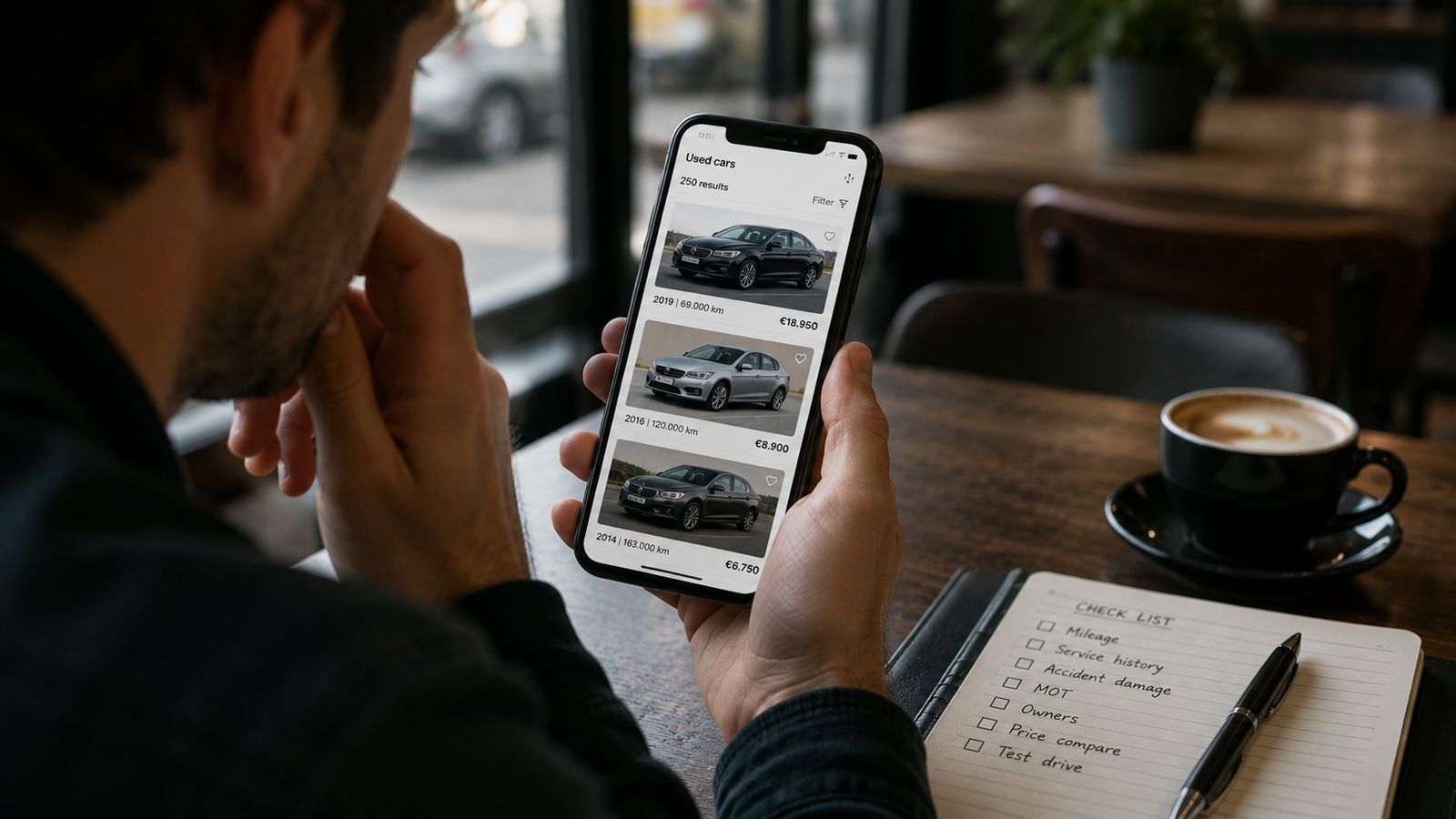
Scam listings tend to repeat the same handful of tactics regardless of country: a price well below market, a seller who avoids meeting in person or letting you test drive, payment requests that bypass normal traceable channels, and manufactured urgency. In the US, imposter and marketplace-style fraud reports to the Federal Trade Commission grew for a fifth straight year in 2025, and vehicle-history provider CARFAX has separately flagged a rise in tactics like VIN cloning and fake escrow services in online car sales. The pattern is consistent enough that a short checklist catches most scam ads before you waste time or money.
Scam used-car listings show up on marketplaces in every country, and they tend to reuse the same small set of tactics because those tactics work: an unrealistically low price to create urgency, a seller who avoids meeting or letting you test drive, and a payment request that routes around normal, traceable channels. In the US, the Federal Trade Commission's Consumer Sentinel Network logged imposter scams as the most-reported fraud category for a fifth consecutive year in 2025, and vehicle-history provider CARFAX has separately warned about a rise in car-specific tactics like VIN cloning, fake dealership sites, and escrow scams in online car sales. Fraud-reporting scale and enforcement differ by country, but the ad-level patterns below repeat everywhere and are worth checking before you reply to any listing.
Why this is worth a checklist, not just instinct
Scam ads are designed to move fast: get you excited about a price, then get you to act before you'd normally stop and verify. A short, repeatable checklist works because it forces the pause the scam is designed to prevent. None of the signals below prove fraud on their own, but two or more together is reason to walk away.
1. A price that's meaningfully below market
The single most common hook is price. If a car is priced well under what comparable listings show for the same model, year, and mileage, that gap needs a legitimate explanation: a distressed sale, a mechanical issue disclosed in the ad, or genuine urgency on the seller's side. Without one, an unusually low price is often the mechanism, not the deal: it's what gets a buyer to skip the questions they'd otherwise ask.
2. The seller won't meet in person or won't allow a test drive
A legitimate seller wants to sell the car, which means showing it. Common excuses in scam listings include claims that the seller is abroad, in the military, or has already shipped the car pending payment. If a seller resists an in-person viewing, a video call, or a test drive (especially while still asking for money), treat that as close to disqualifying.
3. Payment requested outside normal, traceable channels
Requests for wire transfers, gift cards, cryptocurrency, or "escrow" services you haven't independently verified are the clearest financial red flag. Legitimate car sales are traceable and reversible enough to dispute if something goes wrong; the payment methods scammers push for are specifically chosen because they aren't. A request to pay any amount (deposit or full price) before you've seen the car in person is a major risk regardless of the payment method.
4. Manufactured urgency and pressure
Messages claiming "several other buyers are interested" or pushing you to decide within hours are a pressure tactic, not new information. Genuine sellers with real competing interest generally don't need to manufacture urgency: the market does that on its own. Pressure is a tool to stop you from doing exactly the checks in this article.
5. Listing details that don't add up
Look for inconsistencies between the photos, the description, and the VIN or chassis number. VIN cloning (copying a legitimate vehicle's identification number onto a different, often stolen or salvage, vehicle) is a documented tactic that a mismatched or partially obscured VIN can hint at. Reverse-image-searching listing photos can also reveal the same images reused across multiple unrelated ads in different cities or countries, a common sign of a templated scam listing.
Red flags at a glance
| Red flag | What it usually signals | What to do |
|---|---|---|
| Price well below comparable listings | Bait to skip due diligence, or a serious undisclosed issue | Ask why directly; compare against several similar listings before replying further |
| Won't meet in person / no test drive | Seller may not have possession of the car, or it doesn't exist | Decline to continue unless an in-person or verified video viewing is arranged |
| Wire transfer, gift cards, or unverified escrow requested | Non-reversible payment methods scammers prefer | Never send money before seeing the car; use traceable, reversible payment |
| Urgency ("other buyers waiting") | Pressure tactic to prevent verification | Slow down; a real seller can wait for you to check the car properly |
| VIN mismatch or partially hidden | Possible VIN cloning on a stolen or salvage vehicle | Verify the VIN against the vehicle in person and run a history check before paying anything |
| Same photos reused across unrelated listings | Templated scam ad | Reverse image search the main listing photos |
Putting it together before you reply
Treat any single item above as a reason to ask more questions, and two or more together as a reason to walk away. The pattern matters more than any one signal: scam listings are built to short-circuit verification, so the fix is simply refusing to skip it: insist on seeing the car, insist on traceable payment, and take the time a legitimate seller will always be willing to give you.
A vehicle history check won't stop a scam ad from being posted, but where the VIN, mileage, and record data are available, it does verify the one thing a scammer can't easily fake: whether they actually match what the ad claims, before you send a cent. Check any car before you buy at plateop.com.
Sources
- Federal Trade Commission (FTC) — FTC Data Show People Reported Losing $3.5 Billion to Imposter Scams in 2025
- CARFAX (via PR Newswire) — CARFAX Alerts Consumers to Growing Online Car Sales Scams
- Caribou — Avoid these 7 used car buying scams: how to spot red flags before you sign anything
- OnPoint Community Credit Union — How to Spot Red Flags When Buying and Selling Vehicles Online or in Person